Our group conducts research at the intersections of art, technology and architecture with a focus on design for sustainability. We publish across architecture&design, media art and human-computer interaction. We also build demonstrators, designs and artworks which we exhibit in venues around the world.


Arts & Humanities × Technology
- Digital humanities
- Technology-mediated experiences
- Creative-AI
- Human-AI interaction
- Human-computer interaction
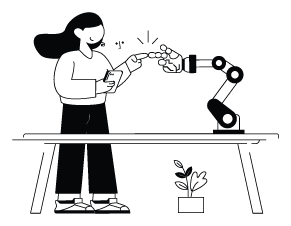
- Human-robot interaction
- Bio-art


Arts & Humanities × Architecture
- Art in public space
- Artistic methods in architecture
- Architectural humanities
- (more-than-)human interactions with space

Technology × Architecture
- Computational design for architecture
- Construction robotics
- Bio-design
Across these fields, we focus on the following:

Computational and AI tools for architecture and design
Investigating practical and theoretical implications of computational tools (including AI) on design processes. We ask questions such as: how do computation and AI change creative processes? What kind of things can we design with computation that could not be designed without it? What and how do we think through computational tools? In short - what is there to gain and what is to lose from the on-going retooling of these creative professions? And moreover - how does this interact with questions around sustainability? To what extent can computational and AI tools help build more sustainable, equitable, and preferable futures?
Digital fabrication using natural materials
Architecture and design are among the industries with the highest environmental impact through their high energy and material use, thus being responsible for high levels of CO2, as well as other emissions, such as methane. Developing new materials that biodegrade faster, that are grown rather than mined, can help alleviate the environmental impact of designed products and buildings. We explore new materials, material systems, and fabrication methods. Examples include: mycelium, Bio-rock, sea-shell based concretes, or 4D printing. We show how these materials can be applied to designed products or buildings.